

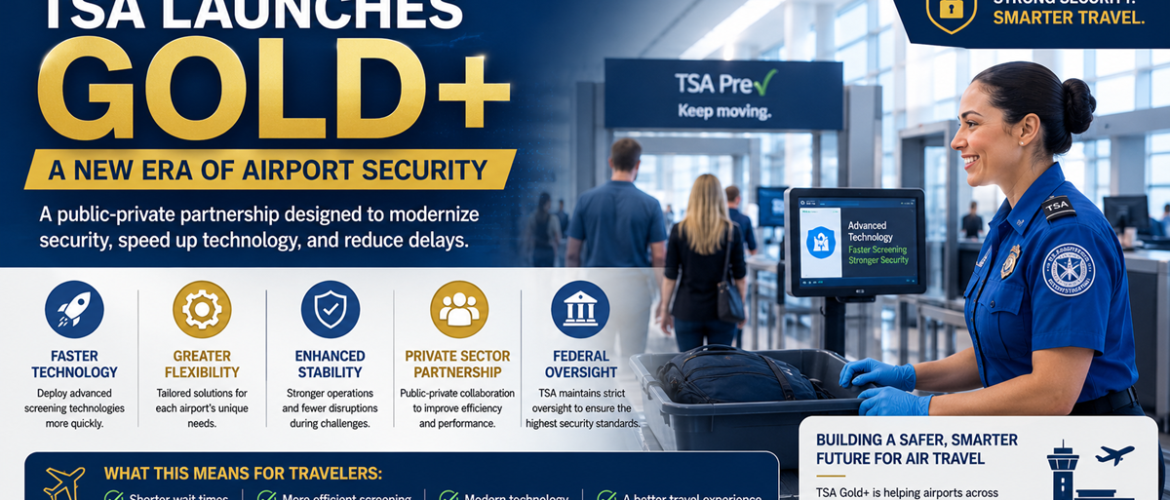
TSA Gold+ Program Explained: How the New Airport Security Initiative Could Transform Air Travel in 2026?
The U.S. Transportation Security Administration (TSA) has officially launched its long-rumored TSA Gold+ program, a new public-private partnership designed to modernize airport security, accelerate technology adoption, and help airports maintain operations during staffing shortages and government funding disruptions. The initiative is already generating significant attention across the aviation industry and among frequent travelers.
What Is TSA Gold+?
TSA Gold+ is an expansion of the agency’s existing Screening Partnership Program (SPP), which already allows selected airports to use private security contractors under TSA oversight. The new program goes a step further by enabling participating airports to play a larger role in managing security technology, equipment maintenance, and screening operations while still adhering to federal security requirements.
According to TSA, the goal is to create a more flexible and resilient airport security system capable of adapting to each airport’s unique operational needs.
Why is TSA Launching Gold+ Now?
The program comes as airports face growing passenger volumes, increasing operational demands, and concerns about staffing shortages that have affected security checkpoint performance in recent years. TSA says Gold+ can help airports avoid disruptions caused by federal funding challenges while speeding up the deployment of advanced screening technologies.
Industry observers also note that major upcoming events, including increased international travel and large-scale sporting events, are placing additional pressure on airport infrastructure and security systems.
Features of TSA Gold+
1. Faster Technology Deployment
Participating airports may be able to introduce new screening technologies and operational improvements more quickly than through traditional federal procurement processes. TSA believes this could help improve checkpoint efficiency and traveler throughput.
2. Greater Airport Flexibility
Airports can tailor screening operations to their specific facility requirements, passenger volumes, and operational challenges instead of relying solely on standardized approaches.
3. Enhanced Operational Stability
One of the primary goals of Gold+ is to reduce disruptions caused by government shutdowns or staffing shortages. Private contractors participating in the program may provide additional workforce continuity during periods of federal uncertainty.
4. Continued Federal Oversight
Although private partners may manage more aspects of airport security operations, TSA states that it will continue overseeing compliance and ensuring all participating airports meet or exceed federal security standards.
Currently How many Airports are participating SPP?
Will Travelers Notice Any Changes?
For now, travelers should not expect immediate changes at airport checkpoints.
- TSA PreCheck remains unchanged
- Identification requirements remain the same
- Security screening rules continue to apply
- Existing expedited screening programs will continue operating.
However, over time, passengers at participating airports may experience faster processing, newer screening technologies, and more efficient checkpoint operations.

Why Some Experts Support the Program?
Supporters argue that TSA Gold+ could modernize airport security by:
- Accelerating technology upgrades
- Reducing wait times
- Improving operational flexibility
- Strengthening airport resilience during staffing challenges
- Helping airports adapt to increasing passenger demand
Advocates believe the public-private model could create a more efficient screening environment without compromising security standards.
TSA Digital ID: What is it, How it’s processed, Add Mobile Drivers License, Airports pilots’ Digital ID, Airlines/State accept TSA Precheck Digital ID?
Concerns and Criticism
Not everyone supports the initiative. Some labor organizations and aviation experts have raised concerns about increasing private-sector involvement in airport security operations. Critics argue that differing technologies and operating models could lead to inconsistent passenger experiences across airports. Others question whether private contractors should have greater control over critical security infrastructure.
TSA maintains that strict federal oversight will remain in place to ensure security standards are consistently enforced nationwide.
What This Means for the Future of Air Travel?
TSA Gold+ represents one of the most significant changes to U.S. airport security operations in recent years. If widely adopted, the program could reshape how airports deploy technology, manage security staffing, and process passengers in the years ahead. While travelers may not see immediate differences, the initiative signals a broader shift toward modernized and more flexible airport security systems.
Will TSA Gold+ cost money?
TSA Gold+ airports receive staffing, technology, and maintenance at no additional cost to airports. By enabling direct investment – without waiting on lengthy budget cycles – TSA Gold+ unlocks new revenue streams, empowers local decision-making, and accelerates the deployment of cutting-edge solutions nationwide.
👉For more detailed information about TSA Gold+, please visit here.